19 February 2026
The Learn-It-All Educator - A Guidebook for Training Brains (OER)

Your Fear About AI and Critical Thinking Is Correct. Here's What to Do About It
You've watched it happen. A student submits woguidrk that's technically polished but somehow hollow. The argument goes through the motions. The analysis is present but not thought. You can't quite prove it, but you know something's missing — the friction, the struggle, the evidence that a human mind actually wrestled with the material.
Your instinct is right, and the research is catching up to confirm it.
A landmark study from MIT's Sloan School of Management (prepring available) found that participants who used AI assistance for writing tasks showed measurably weaker independent recall and reasoning on follow-up assessments compared to those who worked without it. The cognitive shortcuts that AI offers aren't neutral conveniences, they can quietly atrophy the very capacities we're trying to develop in our students. When the brain doesn't need to retrieve, connect, or construct, it gradually stops doing those things as well.
This is not a fringe concern. It's a legitimate pedagogical emergency hiding inside an optimistic technology narrative.
So here's the real question: Does that mean we should ban AI from our classrooms?
No. But it does mean we need something most AI integration conversations are missing, a framework grounded in how learning actually works.
The Problem with the Current Conversation
Most faculty development around AI falls into one of two camps. The first is uncritical enthusiasm: AI saves time, personalizes learning, prepares students for the workforce, adopt it, full stop. The second is reactive avoidance: AI enables cheating, undermines rigor, destroys authentic assessment, ban it, full stop.
Neither position is useful. Both ignore the neurological and pedagogical evidence. And both leave instructors without practical tools for navigating a genuinely complex situation in real classrooms, with real students, under real institutional pressures.
What's been missing is a framework that takes the threat to cognition seriously and provides a workable path forward.
Training Brains, Not Replacing Them
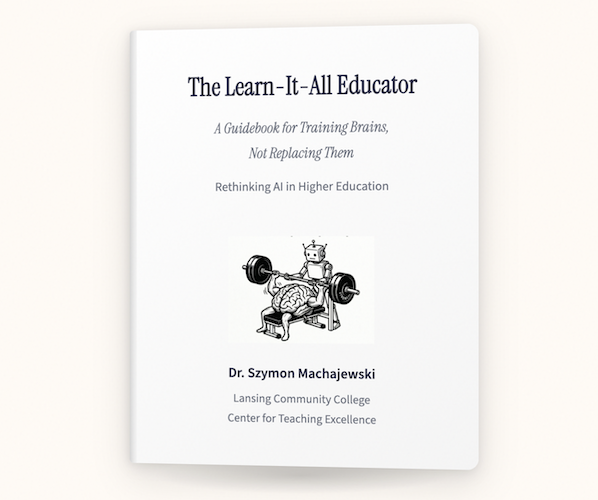
The Learn-It-All Educator: A Guidebook for Training Brains, Not Replacing Them was written for instructors who already sense the stakes and want more than platitudes.
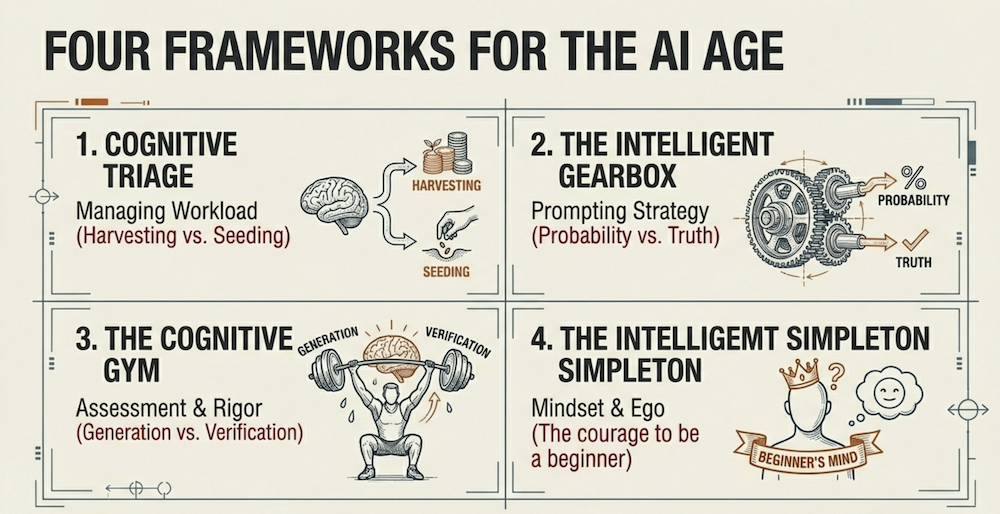
The guidebook introduces four core frameworks, each designed to address a specific dimension of the AI integration challenge.
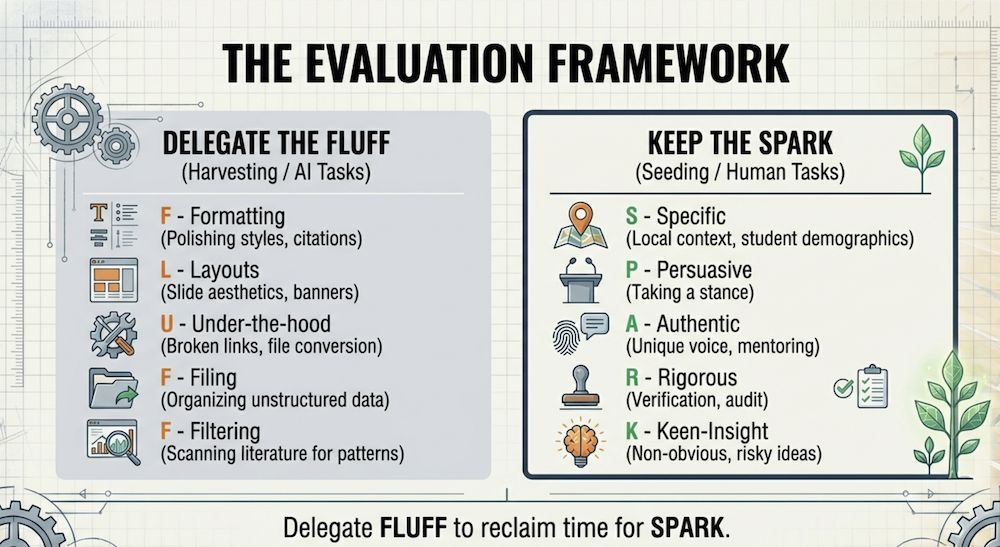
Cognitive Triage helps educators identify where AI use genuinely reduces administrative burden without touching learning — the grading logistics, the scheduling, the formatting, so that reclaimed time goes back into the high-cognition work only humans can do.
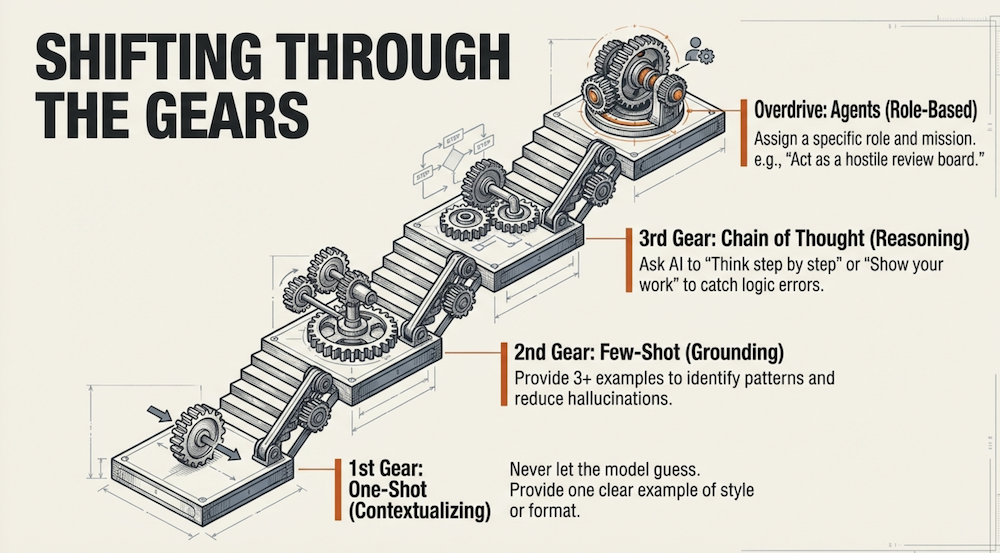
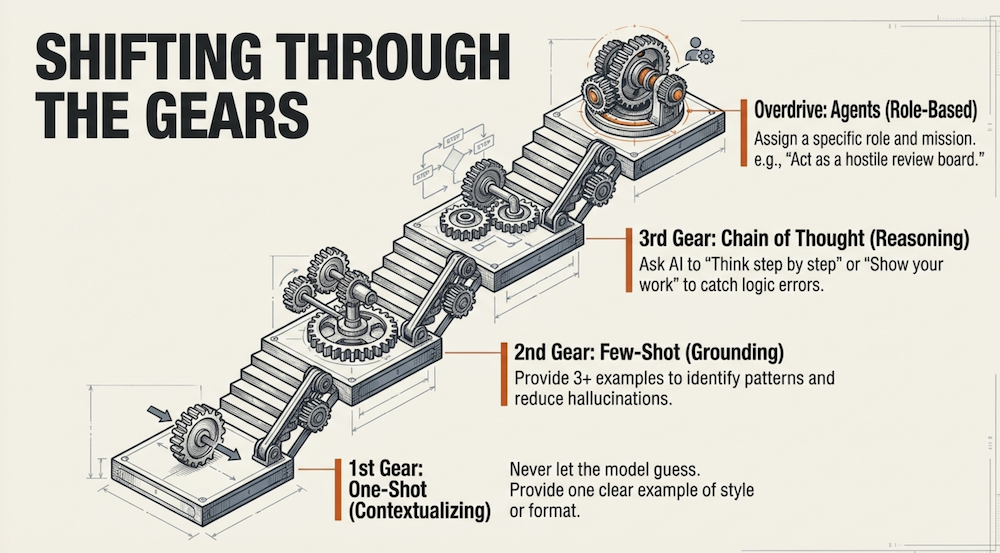
The Intelligent Gearbox provides a model for understanding what AI actually is and isn't capable of, mapped onto what your discipline actually requires students to develop. Not all AI use is equal. Some uses offload rote tasks. Others offload thinking. This framework helps you tell the difference and make deliberate choices.
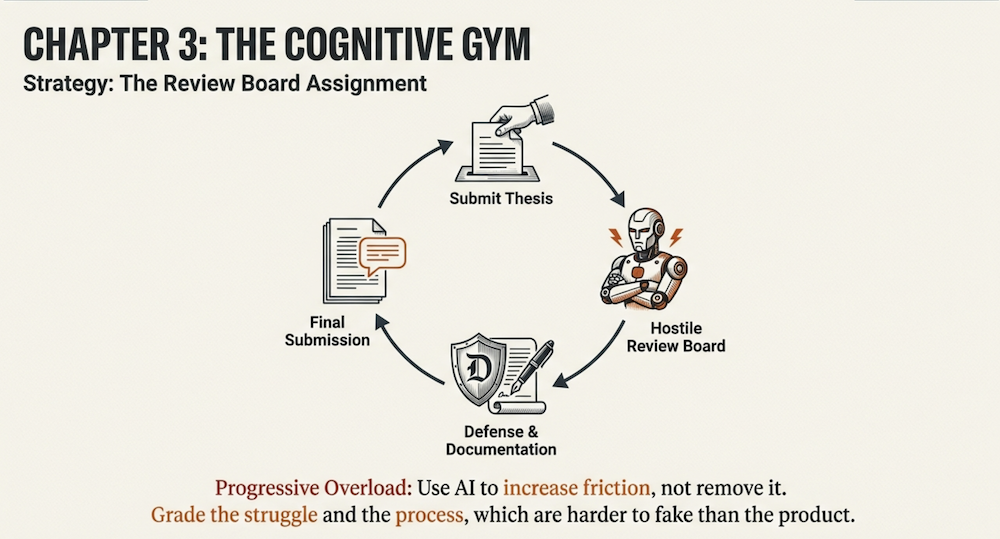
The Cognitive Gym is the pedagogical core of the book. Drawing on retrieval practice, interleaving, desirable difficulties, and metacognitive development, it offers concrete design strategies for building assignments and learning sequences where AI can be present in the environment without becoming a cognitive prosthetic. The goal is to design for productive struggle, the kind that builds durable knowledge and transferable skill.
The Intelligent Simpleton addresses the mindset dimension. The most dangerous assumption an educator can bring to AI integration is the assumption that they've already figured it out. The learn-it-all orientation, staying genuinely curious, modeling intellectual humility, revising one's own thinking publicly, turns out to be both a survival strategy and a teaching strategy.
Who This Is For
If you've ever felt that AI conversations in your institution move too fast, skip the important questions, or assume everyone shares the same risk tolerance, this guidebook was written for you.
It's for the instructor who wants to engage thoughtfully rather than reactively. Who wants to tell students why certain cognitive struggles are worth preserving, not just that they are. Who wants a way to talk about AI with colleagues that moves beyond the ban-it-or-embrace-it binary.
It's also for the instructor who's already experimenting and wants a vocabulary for what they're trying to do, a framework that connects their practice to the research on learning and cognition.
The Stakes Are Real, and So Is the Path Forward
Critical thinking doesn't disappear overnight. It erodes gradually, assignment by assignment, when students are never required to think without assistance. The solution isn't to pretend AI doesn't exist. It's to become the kind of educator who understands the neuroscience of learning well enough to design around the risks and with the possibilities.
That's what this guidebook is for.
Explore the OER guidebook on Zenodo and access the companion website with videos and additional media.
Dr. Szymon Machajewski is Associate Director of Academic Technology and Learning Innovation at the University of Illinois Chicago
Discussion
Please login to post a comment